Many operators skip priming priming in centrifugal pump systems when they are in a rush, and this is a big mistake. A centrifugal pump cannot move water unless you prime it properly. Instead, it may only make noise and become hot inside. Running the pump like this for even a few minutes can damage the seals or impeller. I have seen this happen on small irrigation pumps as well as larger water treatment units. The solution is simple, but people still ignore it because priming feels like an extra step. It is not extra. It is the first step.
What Is Priming in Centrifugal Pump?
Priming means adding water to the pump body and suction pipe before starting the pump. This pushes out the air stuck inside. A centrifugal pump needs water to create suction and move the water through the pump casing. If there is air inside, the impeller just keeps spinning, but nothing happens — it cannot pull water up from the source because there is no pressure difference created. It is similar to drinking through a straw with a small hole in it. You can keep trying, but water will not come through properly until the hole is closed.
Why Priming in Centrifugal Pump Is Necessary: The Core Reasons
Centrifugal pumps have one weakness — they can’t handle air like positive displacement pumps do. Air is about 800 times lighter than water, so when the impeller starts spinning in a casing full of air, it simply doesn’t have enough force to pull the water up. That is why operators need to prime the pump before starting it.
Then there’s NPSH — Net Positive Suction Head. Every pump needs a certain minimum pressure on the suction side, otherwise it just won’t work properly. If the pump is not primed first, it cannot build up enough pressure. And once that happens, problems start — like air binding, where air pockets get stuck inside the pump and prevent the water from flowing properly.
Performance is not the only concern here, though. Mechanical seals need a thin layer of liquid to stay cool and lubricated. Even a few seconds of dry running can damage that seal — and once it wears out, repair costs go up fast. It gets worse in suction lift setups too, since the pump already has to work extra hard to pull water upward against gravity.
So skipping Priming in Centrifugal Pump in isn’t really saving time. Most of the time, it just means a bigger repair bill later.
What Happens If You Skip Priming:
Skip priming, and you’re looking at dry running almost immediately — the pump spins without moving any real volume of liquid. Friction builds up fast, heat spikes inside the casing, and the mechanical seal can crack or burn out within minutes. You might also hear excessive vibration or a strange rattling noise, an early sign of cavitation setting in. Worse, prolonged dry running can warp the impeller or damage bearings permanently, turning a five-minute oversight into a costly repair bill.
Positive Suction vs Negative Suction Priming in Centrifugal Pump:
Not every pump setup faces the same priming challenge, and this is where positive suction and negative suction come into play. With positive suction (also called flooded suction), the water source sits above the pump’s centerline — think of an overhead tank feeding down into the pump. Gravity does most of the work here, so priming is quick and, in many cases, happens almost automatically once the suction valve opens.
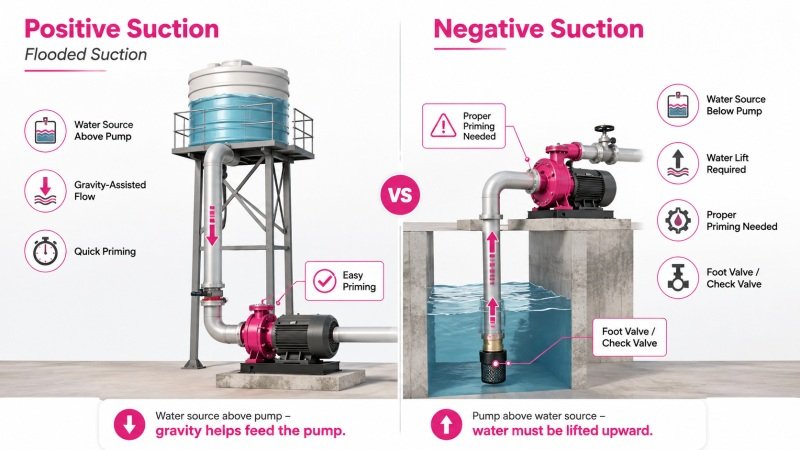
Negative suction is a more challenging setup. Here, the pump is placed above the water source — a borewell or a sump, for example — and has to lift water upward against gravity before it even starts pumping properly. This setup requires proper Priming in Centrifugal Pump every time, along with a reliable foot valve or check valve to prevent the water column from flowing back into the source when the pump is not running. If this is missed, the pump may need to be primed again every morning, which can be frustrating and time-consuming.
Step-by-Step Guide: How to Prime a Centrifugal Pump Correctly
Getting the centrifugal pump priming process right isn’t complicated, but it does demand a bit of patience. Here’s how it’s usually done:
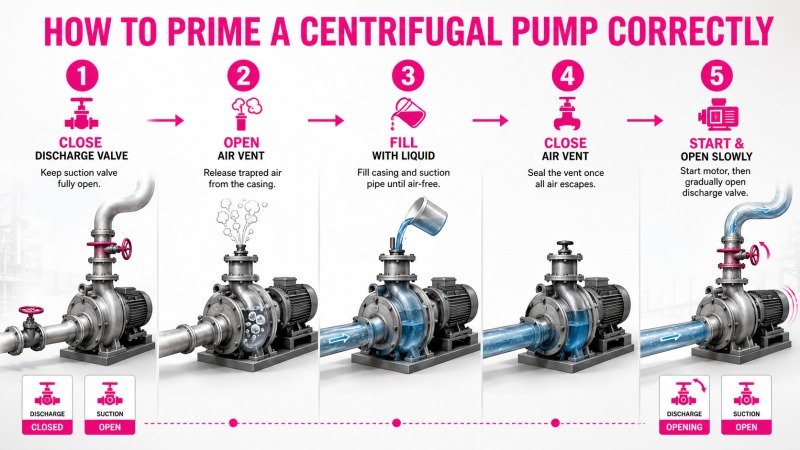
- Close the discharge valve first, keeping the suction valve fully open.
- Locate the air vent valve on top of the pump casing and open it.
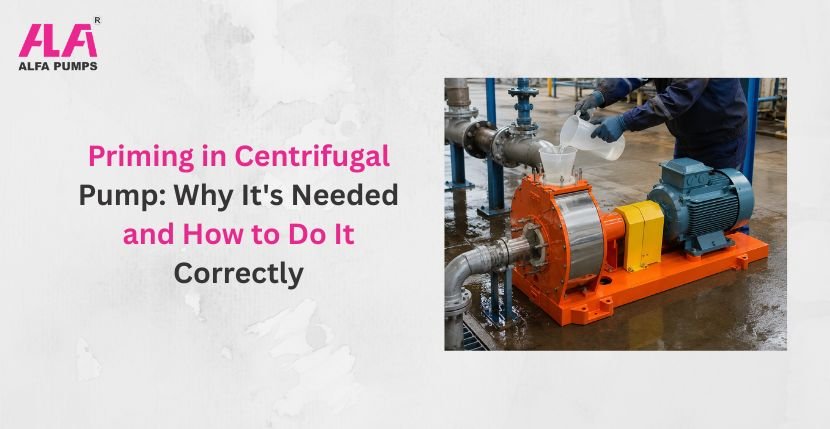
- Fill the casing and suction piping with liquid — either manually through a funnel, using a priming pump, or via a vacuum priming system — until water flows steadily from the vent, with no air bubbles.
- Close the air vent valve tightly once all air has escaped.
- Start the motor, then gradually open the discharge valve to establish full flow.
Keep checking the pump during this stage — listen carefully too. If you hear sputtering sound or the flow is not steady, it means air is still stuck somewhere in the suction pipe. You will have to repeat the process again. Don’t rush this part. If you go fast, you may end up damaging a good pump for no reason.
Common Priming Methods (Manual, Foot Valve, Vacuum, and Self-Priming):
There isn’t just one way to prime a pump, and the right centrifugal pump Priming in Centrifugal Pump methods depend on your setup. Manual priming works fine for smaller domestic pumps — just pour water in through the vent. Foot valve priming uses a one-way valve at the suction pipe’s end to hold the prime between runs, ideal for negative suction systems. Vacuum priming pulls air out mechanically using a separate vacuum pump, common in larger industrial installations. And then there’s the self-priming pump, which uses a bit of retained liquid from the previous cycle to re-establish prime automatically — genuinely handy for pumps that start and stop often.
Common Priming Problems and Quick Fixes:
Losing prime repeatedly? Check the foot valve or check valve for leaks — a worn seat is usually the culprit. Air leaks in suction piping joints are another frequent troublemaker; a bit of Teflon tape or proper gasket sealing often does the trick. If cavitation noises persist even after priming, look at your suction lift height — it might simply be exceeding the pump’s rated NPSH.
Conclusion: Making Priming a Standard Practice
Priming the centrifugal pump is a small step, but if you skip it, the whole system gives trouble later. Always check the foot valve first — sometimes it looks fine but is not sealing properly. Also check for any air leak in the suction line, because even a small leak stops proper priming. Don’t just start the pump and think it will settle on its own; that habit causes most of the problems we see in the field. A well-primed pump runs quieter, lasts longer, and honestly, saves you a lot of unnecessary headaches down the road.
FAQs:
Yes, most centrifugal pumps need priming before startup to remove air from the casing and suction line. Without proper pump priming, the pump may run dry and get damaged.
To prime a centrifugal pump, fill the pump casing and suction pipe with liquid, remove trapped air through the vent, then close the vent before starting the motor.
Centrifugal pump priming is necessary because these pumps cannot effectively move air. Proper priming allows the impeller to handle liquid, build pressure, and maintain steady flow.
Running without proper priming can cause dry running, overheating, seal failure, excessive vibration, and impeller damage. The pump may also fail to develop enough suction or discharge flow.
For negative suction systems, the suction line must remain filled using a reliable foot valve or check valve. Proper priming prevents water from flowing back into the sump.

Mr. Sanket Patel is a visionary industrial leader and managing director of Alfa Pumps. He leads the company’s innovation in fluid handling solutions, focusing on chemical process pumps designed for corrosive fluids.