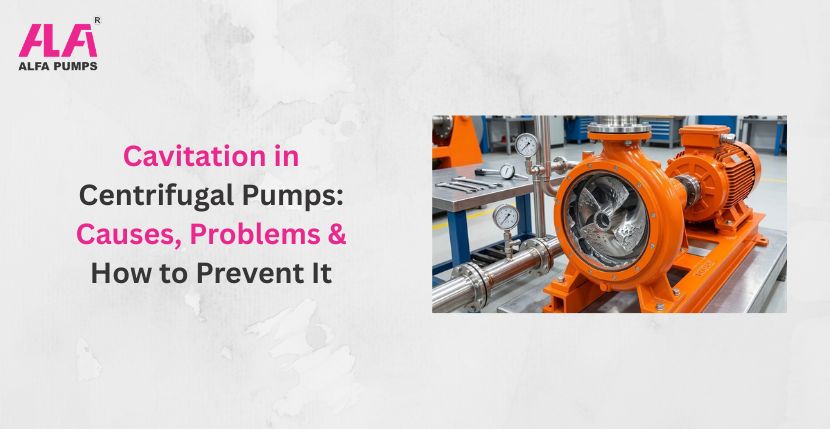
Cavitation in centrifugal pumps is one of those issues many industries face. Still, not all businesses fully understand until damage begins. In simple terms, it happens when pressure drops inside the pump and tiny bubbles form and collapse.
This cavitation process in pumps may sound minor to many. But the impact directly leads to pump cavitation problems like efficiency loss and wear. In India, pump failures contribute to nearly 25% of maintenance costs in fluid systems. This what seems minor is making early understanding of cavitation in centrifugal pumps critical.
How Cavitation Occurs in Centrifugal Pumps:
Consider this in a very practical way. You know that water boils faster at high altitudes, right? Something similar happens inside pumps. When pressure drops too low, vapor bubble formation begins inside the liquid. This is exactly how cavitation in centrifugal pumps starts.
Now, these bubbles don’t stay stable. As fluid moves ahead, pressure increases and these bubbles collapse instantly. That collapse releases energy, like tiny explosions hitting the internal surfaces. This ongoing cavitation process in pumps leads to pump cavitation damage over time.
In day-to-day operations, especially in factories or water supply systems, Low pressure cavitation in pumps is quite common due to poor suction design. Studies suggest that nearly 60% of premature pump failures are linked to improper suction conditions.
So when we talk about cavitation in centrifugal pumps, it’s a real operational risk. And this danger quietly increases pump cavitation problems if ignored.
Net Positive Suction Head (NPSH): The Key Concept Behind Cavitation
One important technical concept related to cavitation in centrifugal pumps is Net Positive Suction Head (NPSH). Understanding this helps engineers and operators avoid many pump cavitation problems.
There are mainly two types of NPSH:
1. NPSH Available (NPSHa):
This is the actual pressure available at the pump suction from the system. It depends on factors like:
- Height of the liquid source
- Pipe friction losses
- Fluid temperature
- Atmospheric pressure
2. NPSH Required (NPSHr):
This is the minimum pressure required by the pump to operate without cavitation. Pump manufacturers usually provide this value in pump specifications.
Simple Rule to Remember:
If NPSHa < NPSHr then cavitation in centrifugal pumps will start.
Many industrial cavitation problems happen because the system cannot provide enough suction pressure to the pump.
Types of Cavitation in Centrifugal Pumps:
Not all cavitation occurs in the same way. Understanding different types helps engineers identify the exact problem faster.
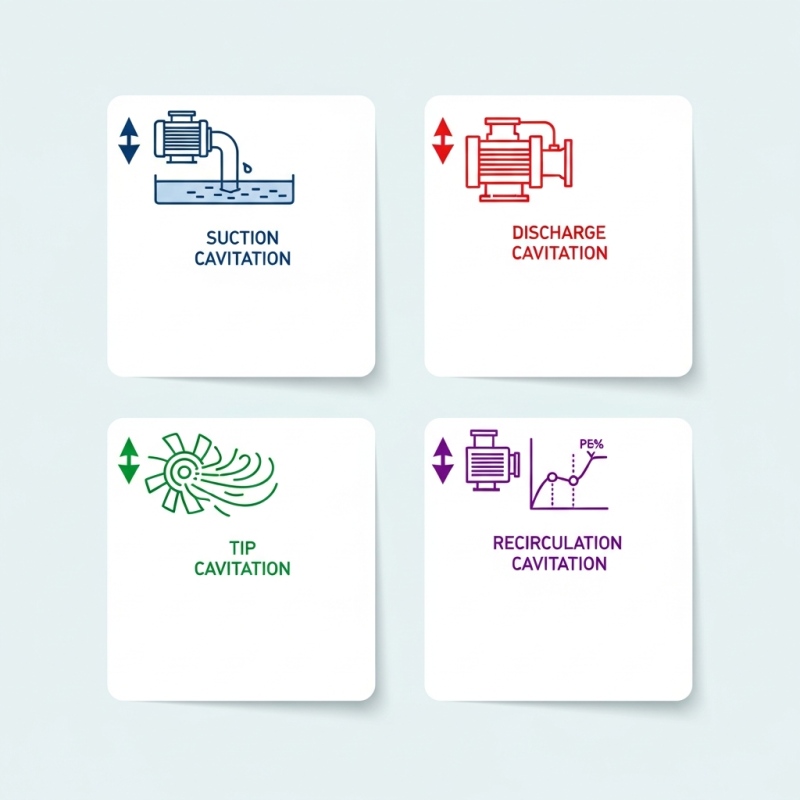
1. Suction Cavitation: This is the most common type. It happens when the suction pressure is too low.
Common causes:
- Blocked suction pipe
- Long suction pipelines
- Low liquid level
2. Discharge Cavitation: This occurs when discharge pressure becomes too high.
In this case:
- Liquid flow becomes restricted
- Recirculation occurs inside the pump
3. Tip Cavitation: This happens near the tips of impeller blades where fluid velocity becomes very high.
4. Recirculation Cavitation: This occurs when pumps operate far away from their best efficiency point (BEP).
Knowing the type of cavitation helps engineers fix the problem quickly.
Read Also: Choosing the Right Pump Impeller: Proven Types and Smart Considerations
Common Causes of Cavitation in Centrifugal Pumps:
Now let’s break down the real reasons behind this. Most centrifugal pump cavitation causes come from everyday design or operational mistakes. Understanding these centrifugal pump cavitation causes is the first step to avoiding repeated breakdowns.
Here are the most common centrifugal pump cavitation causes seen across Indian industries:
- Low suction pressure: This is the biggest trigger. When pressure drops, Low pressure cavitation in pumps starts immediately.
- Wrong pipe sizing: Narrow or long pipelines increase friction losses, leading to pump cavitation problems.
- High temperature fluids: As temperature rises, vapor bubble formation becomes easier, speeding up the cavitation process in pumps.
- Improper pump selection: Using the wrong pump for the job is one of the top centrifugal pump cavitation causes globally.
- Air leaks in suction line: Even small leaks can increase pump cavitation vibration and instability.
In sectors like cavitation in chemical processing pumps, the impact is even more serious because chemicals react differently under pressure changes.
A practical example: Many small plants in India use standard pumps for multiple applications. Initially it works, but slowly cavitation in centrifugal pumps begins. Thus, within months pump cavitation problems start showing as noise, vibration and reduced output.
Signs and Effects of Cavitation in Pumps:
Now the tricky part- cavitation doesn’t always show itself clearly in the beginning. But if you pay attention, the signs are there. Typical indicators of pump cavitation problems include:
- A cracking or rattling sound, like stones moving inside
- Noticeable pump cavitation vibration
- Drop in discharge or uneven flow
- Sudden dip in efficiency
Over time, the cavitation process in pumps causes visible damage. You will start seeing pitting on impellers, cracks and material loss. This type of pump cavitation damage can reduce pump life by up to 40%, according to industry maintenance reports.
In everyday operations (irrigation, manufacturing or water transfer)—cavitation in centrifugal pumps directly impacts productivity.
Ignoring early pump cavitation problems means higher electricity bills, frequent repairs and unplanned downtime. Certainly, no business can afford this today or any day.
How to Detect Cavitation Early in Pumps:
Today many industries use modern monitoring methods to detect cavitation before serious damage happens.
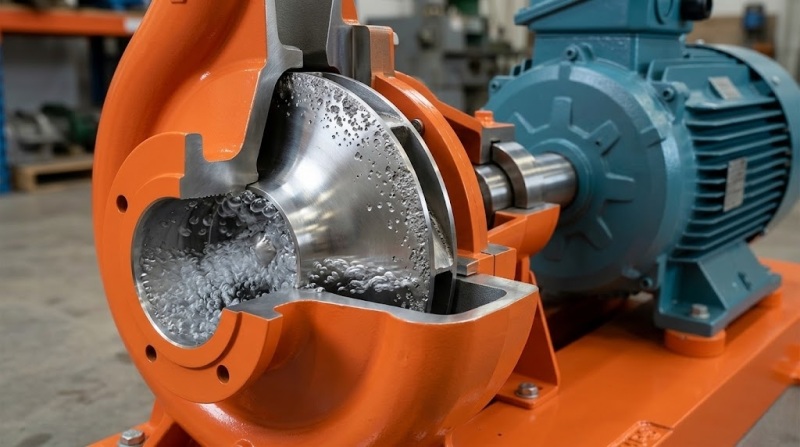
Some effective detection methods include:
- Vibration Monitoring – Cavitation creates unusual vibration patterns inside pumps. Vibration sensors can detect these changes early.
- Acoustic Monitoring – Bubble collapse produces a unique high-frequency sound. Acoustic sensors help detect this noise before visible damage occurs.
- Flow Monitoring – Irregular discharge flow is another early sign of cavitation.
- Temperature Monitoring – When cavitation occurs, energy losses increase and pump temperature may rise slightly.
Using these methods helps industries perform predictive maintenance, which reduces sudden failures. Modern predictive maintenance systems using vibration and sensor monitoring can detect pump faults early and help reduce unexpected equipment failures significantly.
Methods to Prevent Cavitation in Centrifugal Pumps:
Now coming to what actually matters – how to prevent cavitation in pumps. That too under real working conditions.
The solution is not complicated, but it needs attention to basics:
- Maintain proper suction conditions to avoid Low pressure cavitation in pumps
- Use correct pipe diameter and reduce bends
- Control fluid temperature to limit vapor bubble formation
- Select the right pump for the right application
Many industries that improved suction design reported up to 15–20% efficiency gains, simply by reducing cavitation in centrifugal pumps. Regular monitoring is equally important. Early detection of pump cavitation vibration helps stop damage before it becomes serious pump cavitation problems. When businesses understand how to prevent cavitation in pumps, they save repair costs. Plus, they overall improve overall system reliability and performance.
Difference Between Cavitation and Air Entrapment:
Many people confuse cavitation with air entering the pump system. However, both problems are different.
| Feature | Cavitation | Air Entrapment |
| Cause | Vapor bubbles formed due to low pressure | Air entering through leaks |
| Sound | Crackling or gravel-like sound | Gurgling noise |
| Damage | Severe impeller erosion | Mostly flow disturbance |
| Occurrence | Inside the liquid due to pressure drop | External air entering system |
Understanding this difference helps operators diagnose pump problems correctly.
Actual Cost Impact of Cavitation on Business Operations:
Let’s talk numbers, because this is where pump cavitation problems hit the hardest. The cavitation process in pumps affects production targets and delivery timelines. We will now make you understand this financial impact step-by-step.
- In many Indian plants, energy accounts for nearly 30–40% of pump operating costs.
- When cavitation in centrifugal pumps sets in, efficiency drops by 10–25%, directly increasing electricity bills.
- Add to that frequent repairs due to pump cavitation damage, and costs rise further.
- Unplanned downtime can cost lakhs per day in process industries.
Why Non-Metallic Pumps Help Reduce Cavitation Damage:
This is where modern solutions come in. Non-metallic pumps are increasingly being used to handle cavitation in centrifugal pumps more effectively.
Unlike traditional metal pumps, these are built with advanced materials that can absorb the impact of the cavitation process in pumps. This reduces internal stress and minimises pump cavitation damage.
In applications like cavitation in chemical processing pumps, non-metallic pumps perform better because they resist both corrosion and pressure fluctuations.
Another big advantage is reduced pump cavitation vibration, which means smoother operation and less wear and tear. Industries using these pumps have reported up to 30% longer service life in challenging conditions.
By addressing major centrifugal pump cavitation causes, non-metallic pumps offer a practical and long-term solution. For businesses dealing with continuous operations, mind it this is not just a technical upgrade! Rather it’s a cost-saving decision against recurring pump cavitation problems.
Read Also: How Wear and Corrosion Silently Destroy Metal Pumps and Cut Their Lifespan
Replace Your Pumps with Alfa Pumps:
If cavitation in centrifugal pumps is affecting your operations, it’s time to fix it properly. Alfa Pumps offers proven solutions built for Indian conditions. Connect today to eliminate pump cavitation problems, improve efficiency. Keep your systems running without costly interruptions.
FAQs:
Cavitation in centrifugal pumps happens when liquid pressure drops below its vapor pressure and small vapor bubbles form inside the pump. These bubbles collapse quickly and cause noise, vibration, and damage to pump components.
The most common causes of cavitation in centrifugal pumps are low suction pressure, improper pipe design, high liquid temperature, and wrong pump selection. These conditions allow vapor bubble formation inside the pump.
Pump cavitation usually produces a cracking or rattling sound, similar to stones hitting inside the pump. You may also notice vibration, reduced flow rate, and lower pump efficiency.
Cavitation in pumps can be prevented by maintaining proper suction pressure, using correct pipe size, controlling fluid temperature, and selecting the right pump for the application.

Mr. Sanket Patel is a visionary industrial leader and managing director of Alfa Pumps. He leads the company’s innovation in fluid handling solutions, focusing on chemical process pumps designed for corrosive fluids.