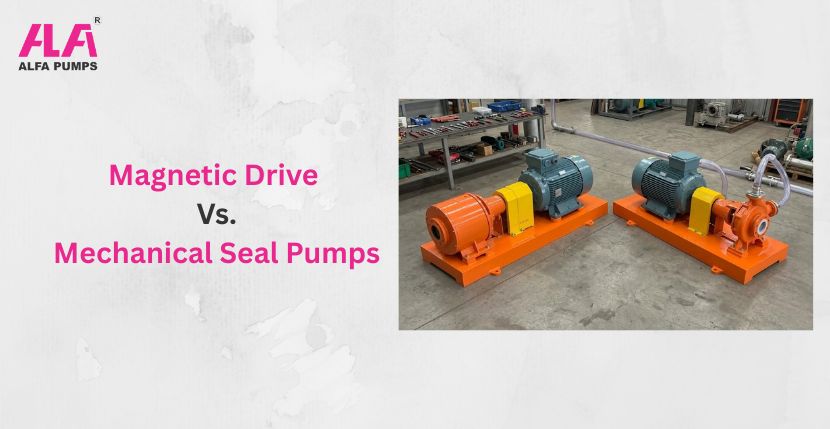
The global industrial pump market continues expanding rapidly. In chemical processing, pharmaceuticals, dyes, petrochemicals, food manufacturing and solvent handling industries, one overlooked pump failure can trigger production shutdowns. This along with other related safety hazards, environmental penalties and massive financial losses. This has increased demand for both advanced Pump seal solutions and modern magnetic drive systems / sealless pump technology. Thus, industries today are aggressively comparing – Magnetic Drive vs. Mechanical Seal Pumps – before making procurement decisions.
That is where Alfa Pumps delivers engineered solutions in both categories, designed specifically for industrial reliability and long-term performance.
How Magnetic Drive Pumps Work:
Magnetic drive pumps operate without traditional shaft seals. Zero direct mechanical connection between the motor and impeller. Magnetic drive pump advantages include the use of magnetic coupling technology. An external magnet attached to the motor transfers rotational force to an internal magnet connected to the impeller.
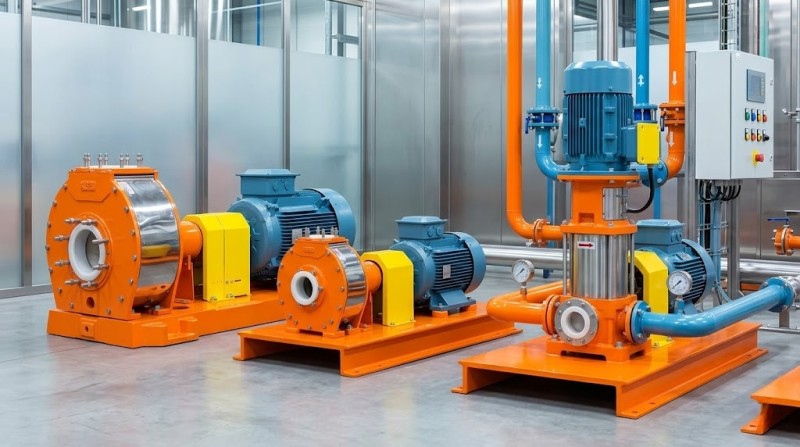
Because there is no physical shaft penetration, there is no conventional seal leakage point. This makes pumps with magnetic drive highly effective. They are widely used for transferring aggressive acids, solvents, toxic chemicals and sensitive fluids.
In modern process industries, hazardous fluid handling pumps using magnetic drive systems are becoming increasingly popular. These meet the challenges of stricter environmental and worker safety regulations. Since the pumping chamber remains completely enclosed, fluid leakage risks reduce significantly.
These pumps are especially suitable for:
- Corrosive chemical transfer
- Pharmaceutical processing
- Acid circulation systems
- High-purity fluid applications
- Toxic liquid handling
How Mechanical Seal Pumps Work:
These use a rotating shaft connected directly to the impeller. To prevent fluid leakage where the shaft exits the pump casing, a mechanical seal assembly is installed. This seal typically has both stationary and rotating faces. They together create a controlled sealing interface.
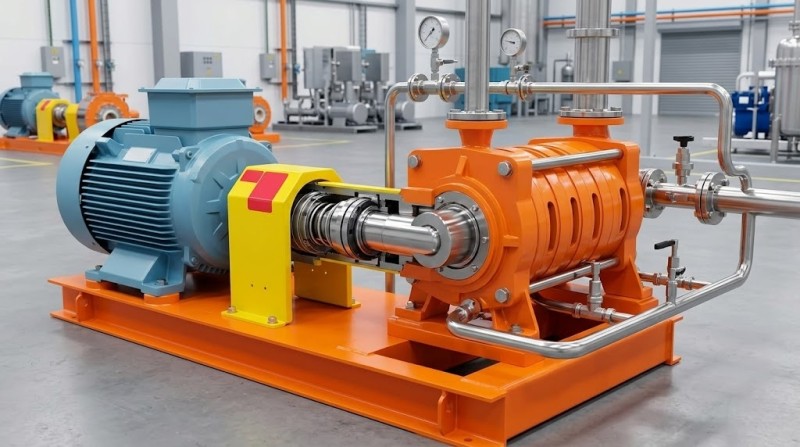
Modern centrifugal pump sealing methods have evolved significantly. This is among the top mechanical seal pump benefits, making them more durable. They are also quite energy-efficient and suitable for demanding industrial environments. Depending on the application, single, double or cartridge seals may be used.
These pumps remain dominant across industries because they can efficiently handle:
- High-temperature fluids
- High-pressure operations
- Slurries and viscous liquids
- Water treatment systems
- Industrial utility applications
Many industrial plants still prefer mech seal pumps because replacement parts are widely available. Also, maintenance teams are familiar with them and operating costs are often lower during initial installation.
Advanced closed couple pumps with Mechanical Seal are particularly preferred in compact industrial setups. Here they excellently meet challenges of space optimization and easy maintenance access are important.
Why Mechanical Seal Pumps Still Dominate Many Industries:
Despite the growing popularity of sealless pumps, mechanical seal pumps continue dominating many industrial sectors because of their operational flexibility and easier servicing.
Industries prefer these pumps because:
- Spare parts are easily available
- Maintenance teams are already trained
- Initial investment is lower
- High-pressure handling is better
- Large flow applications are easier to manage
For utility operations, cooling systems, water circulation and slurry handling applications, pumps with mechanical seals remain a practical and economical choice.
Magnetic Drive Pump Advantages:
The biggest advantage of magnetic drive pumps is leak prevention. Since there is no traditional seal arrangement. Thus, the chances of fluid escaping are extremely low. This becomes critical when handling flammable, toxic or corrosive chemicals.
Key advantages include:
- Near-zero leakage operation
- Reduced environmental contamination risk
- Lower maintenance frequency
- Improved workplace safety
- Better chemical containment
- Reduced seal replacement costs
Another major benefit is operational cleanliness. In pharmaceutical and specialty chemical manufacturing, contamination control directly affects product quality and revenue. Pumps with magnetic drive help maintain fluid purity. That’s because external contaminants cannot easily enter the pumping chamber. Removing the risk of seal failure saves lose lakhs or even crores annually!
Mechanical Seal Pump Benefits:
Pumps with mechanical seals continue dominating industrial operations because of their flexibility, affordability and ability to manage diverse applications. They are highly adaptable and available in numerous material combinations, seal configurations and pressure ratings.
Key advantages include:
- Lower upfront investment
- Easier repair and servicing
- Better suitability for heavy-duty applications
- Excellent high-pressure handling
- Wider operational flexibility
- Better handling of solids and slurry mixtures
Industries using utility systems, cooling circuits, process water and large-scale fluid transfer often choose mech seal pumps. That’s because maintenance infrastructure already exists internally. For facilities needing a cost-effective, corrosion-resistant solution for low-flow chemical transfer, a leak-proof non-metallic chemical pump offers a balanced starting point.
Modern Pump seal technologies have also improved significantly. Advanced sealing materials now provide better wear resistance, thermal stability and operational lifespan than older seal systems.
Pumps with mech seals are also preferred where dry-running conditions may occasionally occur. Magnetic drive systems can suffer damage under prolonged dry operation, whereas certain mechanical seal configurations can tolerate limited operational fluctuations more effectively.
Disadvantages of Magnetic Drive Pumps:
One major issue can be their sensitivity to dry running. Without adequate fluid lubrication, internal components can overheat pump quickly and suffer severe damage.
They are also generally more expensive initially compared to traditional sealed pumps. For facilities operating on tight capital budgets, this higher investment may become a challenge.
Additional drawbacks include:
- Lower tolerance for solids or slurry handling
- Potential magnetic coupling decoupling under extreme loads
- Higher repair complexity
- Specialized maintenance requirements
When Magnetic Drive Pumps May NOT Be Suitable:
Although magnetic drive pumps offer excellent leakage protection, they may not be ideal for every industrial application.
These pumps may not be suitable when:
- Heavy solid particles are present
- Slurry handling is required
- Frequent dry-running conditions occur
- Extremely high viscosity fluids are used
- Budget limitations are very strict
- Monitoring systems are unavailable
Proper application analysis is important before selecting any sealless pump system.
Disadvantages of Mechanical Seal Pumps
The biggest weakness of pumps with mechanical seals is leakage risk. Even high-quality seals with-time wear out due to friction, pressure fluctuations, thermal cycling or improper installation.
While modern centrifugal pump sealing methods have improved reliability, no mechanical seal system is entirely maintenance-free. Seal failure can result in:
- Production downtime
- Product loss
- Safety hazards
- Environmental compliance violations
- Increased maintenance expenses
- Unsuitable for industries handling aggressive chemicals
When Mechanical Seal Pumps May NOT Be Suitable:
Mechanical seal pumps may create operational challenges in highly sensitive applications.
They may not be ideal when:
- Toxic chemical leakage cannot be tolerated
- Product purity is critical
- Environmental regulations are strict
- Hazardous vapor emissions must be minimized
- Frequent shutdowns create high production losses
In such situations, industries often prefer magnetic drive systems for better containment safety.
Common Reasons Industrial Pumps Fail:
Understanding pump failure causes helps industries improve reliability and reduce long-term maintenance costs.
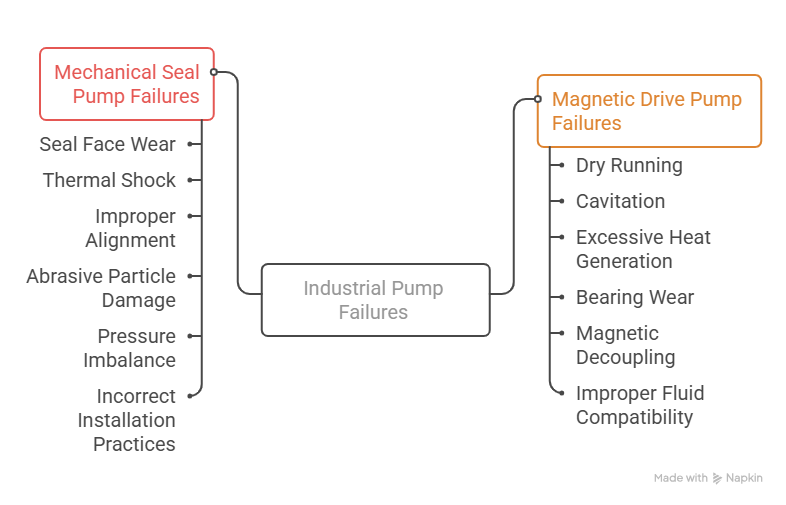
Common Magnetic Drive Pump Failures:
- Dry running
- Cavitation
- Excessive heat generation
- Bearing wear
- Magnetic decoupling
- Improper fluid compatibility
Common Mechanical Seal Pump Failures:
- Seal face wear
- Thermal shock
- Improper alignment
- Abrasive particle damage
- Pressure imbalance
- Incorrect installation practices
Regular preventive maintenance and proper pump selection significantly improve operational lifespan.
Energy Efficiency Comparison Between Magnetic Drive vs. Mechanical Seal Pumps:
Energy efficiency directly affects industrial operating costs, especially in continuous process plants. While comparing Magnetic Drive vs. Mechanical Seal Pumps, industries must carefully evaluate long-term power consumption, maintenance costs and operational stability.
Modern mechanical seal pumps can provide strong hydraulic performance in heavy-duty applications. However, magnetic drive pumps reduce losses associated with leakage management and seal support systems.
Pump energy efficiency depends on:
- Flow requirements
- Operating pressure
- Fluid viscosity
- Pump sizing accuracy
- Operating temperature
- Duty cycle conditions
Selecting the right pump technology helps industries optimize both operational efficiency and maintenance reliability.
Key Differences – Magnetic Drive vs. Mechanical Seal Pumps:
When industries compare Magnetic Drive vs. Mechanical Seal Pumps, the decision usually depends on leakage safety, maintenance requirements, operating conditions and long-term reliability.
| Parameter | Magnetic Drive Pumps | Pumps with Mechanical Seal |
| Leakage Risk | Extremely low | Moderate over long-term use |
| Maintenance | Lower frequency | Higher frequency |
| Initial Cost | Higher | Lower |
| Safety for Hazardous Chemicals | Excellent | Good but seal-dependent |
| Dry Running Tolerance | Limited | Better in some configurations |
| Solids Handling | Limited | Better suitability |
| Operational Complexity | Advanced | Conventional |
| Best For | Toxic/corrosive fluids | General industrial applications |
| Maintenance Expertise | Specialized | Widely available |
| Long-Term Downtime Risk | Lower | Higher if seals fail |
Operating Cost Comparison between Magnetic Drive vs. Mechanical Seal Pumps:
Below is the table showing the operating cost comparison between Magnetic Drive vs. Mechanical Seal Pumps.
| Cost Factor | Magnetic Drive Pumps | Mechanical Seal Pumps |
| Initial Purchase Cost | Higher | Lower |
| Seal Replacement Cost | Very Low | Regular expense |
| Leakage Loss Risk | Extremely Low | Moderate |
| Downtime Risk | Lower | Higher if seals fail |
| Maintenance Frequency | Lower | Higher |
| Spare Inventory Requirement | Lower | Higher |
| Environmental Risk | Lower | Higher |
| Long-Term Reliability | High | Application dependent |
Many industries now evaluate pumps based on total lifecycle cost rather than only initial procurement price.
How to Choose the Right Pump for Your Application:
The right choice depends on fluid type, pressure conditions, maintenance capability and long-term operational risk.
- Magnetic Drive Pump Advantages – Go for them if you need leakage prevention, chemical safety and contamination control are critical.
- Mechanical Seal Pump Benefits – Select them when operational flexibility, lower initial investment and heavy-duty industrial performance matter more.
CTA: Magnetic Drive vs. Mechanical Seal – Which Pump is Better?
There is no universal winner—only the right engineering decision for your process. Alfa Pumps delivers both advanced magnetic drive systems and high-performance pumps with mechanical seals designed for demanding industries. Delaying the right upgrade today can cost your plant far more tomorrow. Connect with us to learn how we can help you.
FAQs:
In Magnetic Drive vs Mechanical Seal Pumps, magnetic drive pumps work without shaft seals, while mechanical seal pumps use sealing arrangements to control leakage during industrial fluid transfer operations.
Major magnetic drive pump advantages include near-zero leakage, improved chemical safety, lower maintenance and better contamination control for hazardous fluid handling and corrosive chemical transfer applications.
The main disadvantage of mechanical seal pumps is seal wear over time, which can cause leakage, maintenance downtime, product loss and increased repair expenses in industrial operations.
Magnetic drive pumps are better for hazardous chemicals because their sealless design reduces leakage risks and improves safety during toxic and corrosive fluid transfer applications.
Sealless pump technology uses magnetic coupling instead of traditional shaft seals, helping industries reduce leakage risks and improve fluid containment during chemical processing operations.
In many industries, magnetic drive pumps provide lower long-term maintenance costs because they eliminate frequent seal replacement and reduce leakage-related maintenance shutdowns.
Magnetic drive pump technology improves workplace safety by minimizing toxic chemical leakage and reducing hazardous vapor emissions in industrial processing environments.
Industries like water treatment, mining, textile and utility services commonly use mechanical seal pumps because of their durability and easier maintenance support.
Energy efficiency in industrial pump systems depends on operating conditions, fluid properties and pump design selected for specific industrial applications.

Mr. Sanket Patel is a visionary industrial leader and managing director of Alfa Pumps. He leads the company’s innovation in fluid handling solutions, focusing on chemical process pumps designed for corrosive fluids.